
Onlays and Inlays
Key Highlights
Conservative restorations for back teeth
Preserve more natural tooth structure than crowns
Longer lasting and stronger than large composite fillings
Tooth-colored restorations that are custom-fit to your bite
Same-day options available with modern digital dentistry
Long-lasting results with proper care
Provided at our Park Slope, Brooklyn dental office
When a cavity or fracture is too large for a filling, many patients assume a crown is the next step. In reality, that isn’t always the most conservative option.
Inlays and onlays are custom restorations designed for back teeth when strength is needed, but enough healthy tooth structure remains. They allow us to repair damage while preserving more of your natural tooth than a full crown would require.
At Park Slope Dentistry Seventh Avenue, our approach is rooted in thoughtful, preservation-focused care. We look at:
how much healthy tooth remains
how the tooth functions when you chew
what will provide long-term stability
For many Park Slope patients, inlays and onlays offer a modern, tooth-friendly solution that restores comfort and function for everyday chewing, without overtreatment.
What Are Dental Inlays and Onlays?
Inlays and onlays are custom-made, indirectly (outside of your mouth) fabricated restorations used to repair damaged teeth, often molars and premolars. They restore strength and function when a tooth is too compromised for a standard filling but doesn’t require full crown coverage.
Unlike fillings, which are placed and shaped by hand in the mouth, inlays and onlays are digitally designed and fabricated outside the mouth, and then bonded precisely into place during the same appointment. This allows for a more accurate fit and added stability, while conserving more healthy tooth structure.
Because they sit between fillings and crowns in terms of coverage, inlays and onlays are often considered a conservative middle ground. They provide durability without unnecessary removal of natural teeth.
Inlay vs Onlay. What’s the Difference?
The difference between an inlay and an onlay comes down to how much of the tooth needs reinforcement.
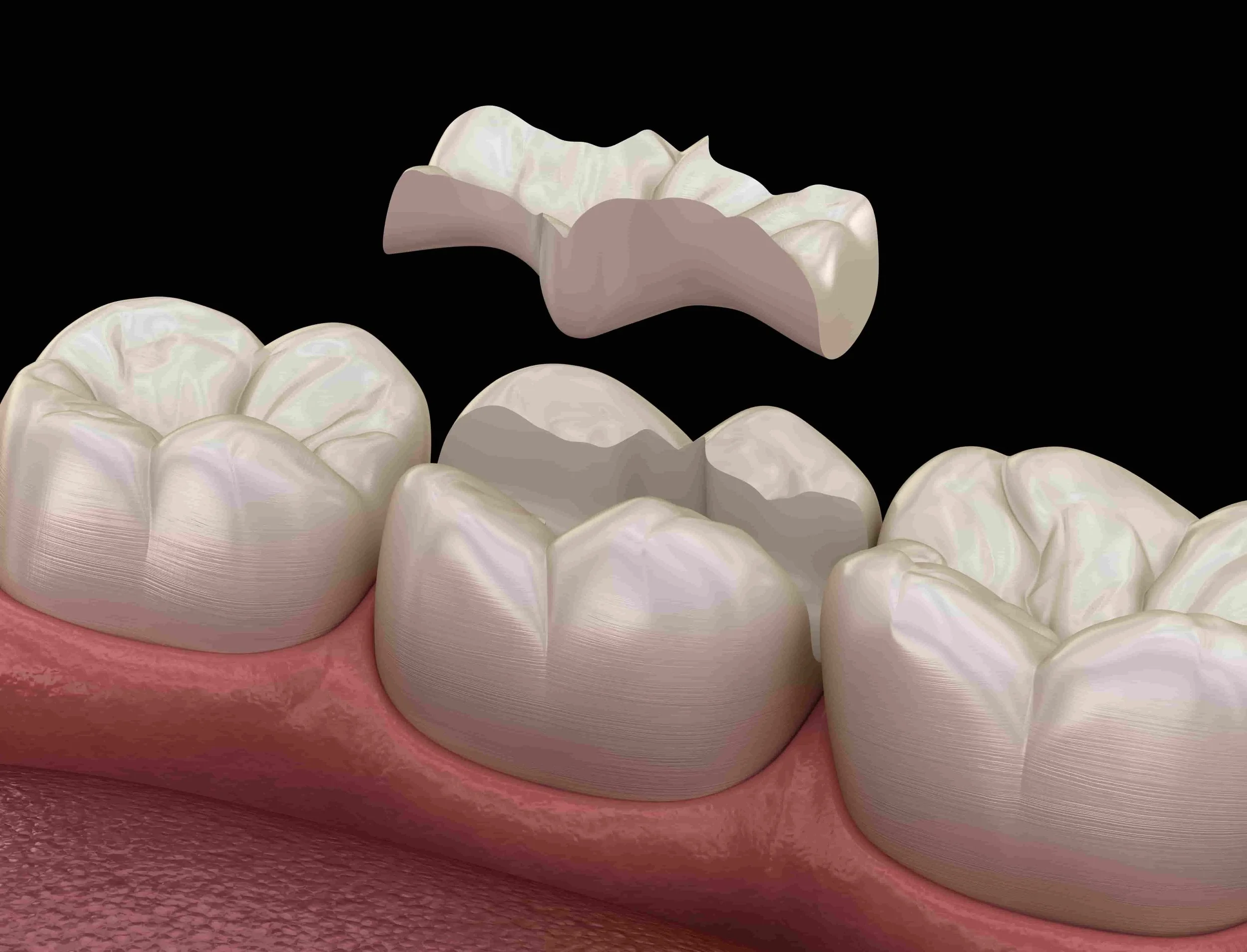
Inlay: Fits within the chewing surface of the tooth, between the cusps. It restores the grooves of the tooth without covering the raised edges.
Onlay: Extends over one or more cusps, reinforcing areas of the tooth that have become weakened or fractured.
When is an Inlay or Onlay the Right Choice?
An inlay or onlay may be the right choice if you have:
A large cavity in a back tooth
A broken or cracked cusp
An old filling that keeps failing or breaking down
A tooth that feels weakened but isn’t severely damaged
Not every damaged tooth requires a crown. When preservation is possible, we look for solutions that reinforce the tooth while keeping as much of your natural structure intact as we can.
Why an Inlay or Onlay Instead of a Crown?
When enough healthy enamel remains, an inlay or onlay allows us to reinforce only the areas that need support. This means less removal of healthy, natural tooth structure.
The materials we use for onlays and inlays are stronger and have been preprocessed, thus they often last longer and fit better than a regular filling.
To find out whether an inlay, onlay, or crown makes the most sense for your tooth, book your appointment online or call 718-866-4645.
Same-Day Inlays and Onlays in Park Slope
In most cases, inlays and onlays are completed in a single visit using modern digital dentistry. This allows us to restore your tooth efficiently without sacrificing precision or comfort.
Instead of traditional impressions, we use digital scanning to capture an accurate model of your tooth. When appropriate, the restoration is then fabricated in-office, so there’s no need for a temporary or a second appointment.
Same-day treatment means:
No goopy impressions
No temporary restorations
Fewer adjustments at delivery
A predictable, comfortable fit
One visit (and getting numb once)
Most cases qualify for same-day treatment, which makes the entire experience much more streamlined and convenient for our patients.
What to Expect During Treatment
Your visit for an inlay or onlay at our Park Slope, Brooklyn office is designed to be straightforward and comfortable. We take time to explain each step so you know exactly what to expect.
1. Exam and planning
We begin with a focused exam to evaluate the tooth and confirm that an inlay or onlay is the right solution for your bite and daily chewing needs.
2. Conservative tooth preparation
The area is gently numbed, and only the damaged or weakened portion of the tooth is removed. The goal is to preserve as much healthy structure as possible.
3. Digital scan or impression
We capture a precise model of your tooth using digital scanning. This helps ensure an accurate fit and predictable results.
4. Fabrication
We use Cerec CAD/CAM technology to digitally design your inlay or onlay. Our milling machine will craft your restoration in about 10 minutes!
5. Bonding and bite check
Once ready, the inlay or onlay is bonded securely into place. We check your bite, make any small adjustments, and polish the restoration so it feels natural when you chew.
Materials Used for Inlays and Onlays
Inlays and onlays can be made from several durable, tooth-colored materials. The right choice depends on how the tooth functions, how much pressure it endures when you chew, and how we can best protect it long-term.
Common options include ceramic or porcelain, which offer strength and a natural appearance. In many cases, we also use hybrid ceramic–composite materials. These combine the durability of ceramic with the flexibility and repairability of composite.
Material selection isn’t one-size-fits-all. We consider bite forces, the location of the tooth, and how easily the restoration could be repaired in the future if needed. Our goal is always the same: restore strength while preserving as much of your natural tooth as possible.
Recovery, Sensitivity, and Aftercare
After your treatment, it’s normal to experience mild sensitivity to temperature or pressure. This usually improves on its own as the tooth settles.
Most patients return to normal chewing within a few days. If your bite feels slightly off at first, we can make small adjustments quickly and easily.
If you clench or grind your teeth, we may recommend a night guard to help protect your restoration and reduce stress on the tooth over time. Our Park Slope provider may also offer Botox as a therapeutic treatment for clenching.
With proper care, inlays and onlays are designed to feel comfortable and function naturally as part of your bite.
How Long Do Inlays and Onlays Last?
With proper care, inlays and onlays can last 10–15 years or longer. Their lifespan depends on several factors, including:
the material used
how much pressure the tooth takes when you chew
how precisely the restoration fits
Daily habits matter. Good brushing and flossing help protect the edges of the restoration. Routine dental exams allow us to monitor your teeth and catch small issues before they become bigger problems.
Cost and Insurance Considerations
The cost of an inlay or onlay depends on the size of the restoration, the material selected, and the location of the tooth. Each case is unique, so we review your treatment plan carefully before proceeding.
Insurance coverage varies by plan. Our Park Slope team provides estimates in advance and can help explain PPO and out-of-network benefits, so you know what to expect before treatment begins.

Why Choose Park Slope Dentistry Seventh Avenue?
Patients choose Park Slope Dentistry Seventh Avenue because our care is rooted in preservation, precision, and patient-oriented decision making.
We take a conservative, preservation-first approach to restorative care
Advanced digital dentistry supports accuracy and comfort
Same-day options improve accuracy and outcomes, and are more comfortable
We’re an established Park Slope practice trusted by the local Brooklyn community
Our goal is simple: protect your natural teeth whenever possible while restoring strength, comfort, and function you can rely on.
Schedule an Inlay or Onlay Consultation in Park Slope
If a tooth feels weak, uncomfortable, or keeps breaking down, early evaluation matters. The sooner we assess the tooth, the more conservative your treatment options may be.
Common Questions About Inlays and Onlays
-
We numb the area before treatment, so you will be comfortable. Feel free to bring headphones so you can listen to a podcast or your music. Some mild sensitivity afterward is normal and usually temporary.
-
We base that decision on how much healthy tooth remains, how the tooth functions when you chew, and the risk of future fracture.
-
For moderate damage, inlays and onlays often provide more strength and stability than very large fillings.
-
Most, if not all cases can be completed in one visit using digital dentistry. It’s rare that the situation requires a lab-made restoration.
-
They’re typically made from ceramic, porcelain, or hybrid ceramic–composite materials.
-
Cost depends on the size of the restoration, the material used, and the tooth location. We provide clear estimates before treatment and review insurance considerations in advance.