
Dental Crowns
Key Highlights
Crowns reinforce and protect teeth that are cracked, weakened, or heavily filled.
Digital scanning reduces chair time and increases comfort, all without messy impressions.
Many crowns can be designed and placed the same day with CEREC. “Lab-fabricated ”crowns may be used when cosmetics are most important.
Crowns restore strength and function or the case is very complex.
Bridges replace a missing tooth when an implant isn’t the right choice for the space
Care is led by Dr. Angelique Freking and our Park Slope team.
Teeth that are cracked, weakened, or heavily filled can become painful or unstable over time. You may notice discomfort when chewing, sensitivity, or a feeling that the tooth just is not as strong as it used to be.
In these situations, a filling is not always enough. When too much of the natural tooth is compromised, it needs support that goes beyond repairing a small area.
Dental crowns are designed to protect and direct chewing forces inward while mimicking the natural shape of your tooth. This allows you to chew comfortably and reduce the risk of further damage or tooth loss by fracture. If you’re unsure whether a crown is needed, a dental exam can help clarify the next step.
When a Crown is the Right Solution
A cracked or fractured tooth
A cavity larger than filling material can restore predictably
A tooth that has had root canal treatment, especially a molar
A tooth that continues to wear or break down
What a Dental Crown Does
A dental crown covers and protects the remaining structure of a weakened tooth and restores the tooth’s shape. It acts much like the rings of a barrel, directing chewing forces towards the center of the tooth and thus, preventing fracturing. This helps prevent tooth loss, because fractured teeth are notoriously difficult to stabilize with treatment.
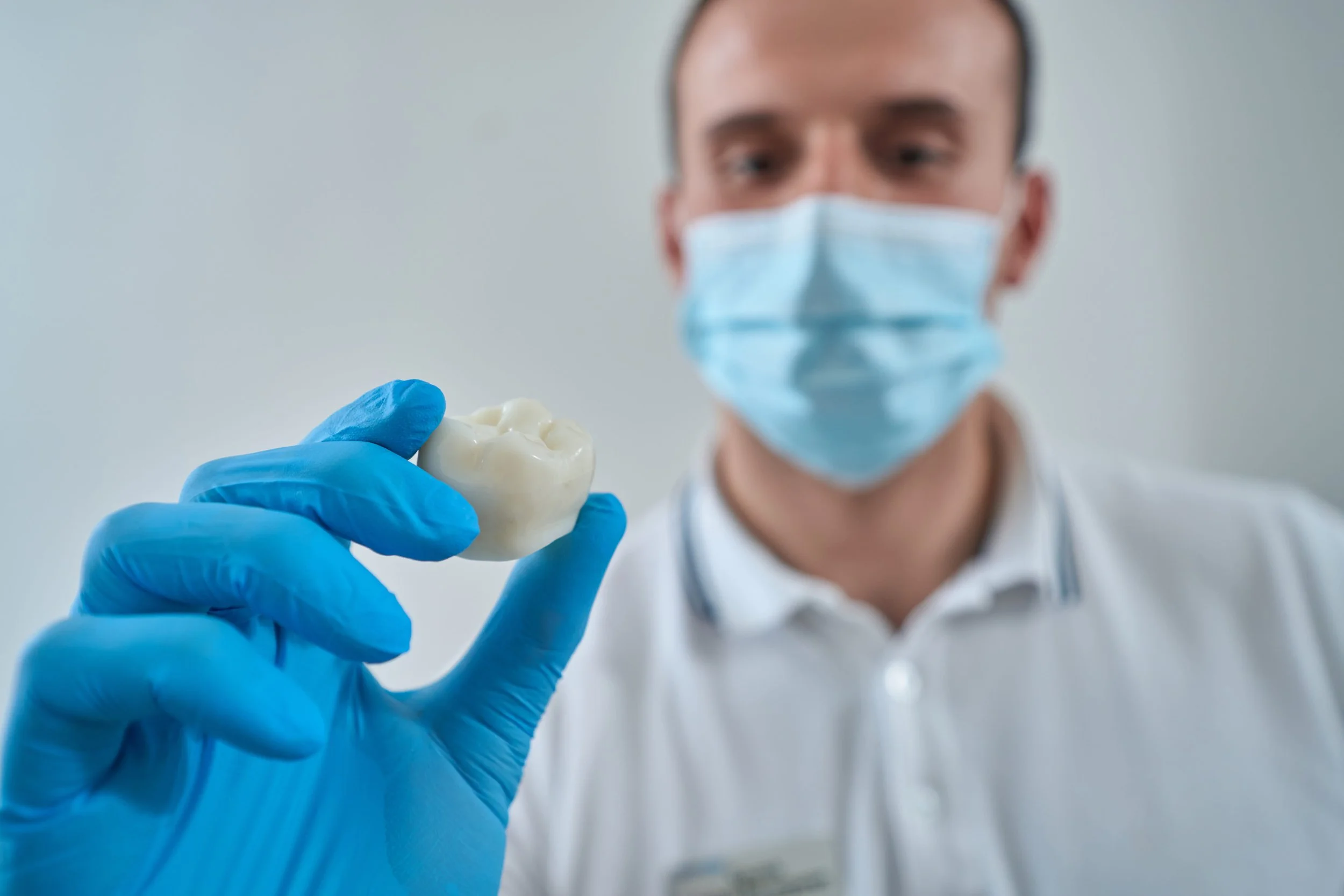
How Crowns Are Made at Park Slope Dentistry Seventh Avenue
Crowns here are planned with a focus on fit, comfort, and long term success. We use digital tools to evaluate the tooth, capture precise measurements that allow us to confirm the ideal strength, thickness, and shape of your new crown on the spot. We can then design an ideal crown that most closely mimics your own unique, natural dentition.
For many cases, this means using digital scans and in-office technology. In other situations, primarily in the front of your mouth, sending your case to a dental lab may be the better choice. The goal is always the same: a crown that fits well, looks great, feels natural, and is easy to clean.
We’ll talk you through the process and explain which option makes the most sense for your tooth before moving forward.
Digital scans instead of impressions
We use intraoral optical scanning to capture detailed images of your tooth. This approach is more comfortable than traditional impressions and allows for greater accuracy from the start.
There’s no gloopy impression material in your mouth or anxiously waiting for it to set and be removed. The digital scan creates a precise model that allows for real-time fabrication.
This is chairside dentistry, and it’s the digital dental technology assisted-approach we use across restorative care. It’s all about improving outcomes and patient comfort at Park Slope Dentistry Seventh Avenue.
Same-day crowns with CEREC
At our Park Slope office, many crowns can be designed and made using CEREC technology during a single visit.
After the digital scan, the restoration is carefully designed and milled in-house, then placed and adjusted the same day. Most of our patients spend this time listening to music, a podcast, or catching up on emails. We also have full sized TV’s if you’d prefer to catch up on your favorite show.
This one-visit approach reduces the number of appointments needed (along with these extra injections) and avoids the use of temporary crowns in most cases. There is no compromise in quality, fit, or materials in a same day crown!
For patients in Brooklyn, a quick visit can help clarify whether your tooth is a good candidate for a same-day crown or needs a different solution. If you’d like to move forward, give us a call! Or, we offer easy, online scheduling for your convenience.
When a traditional crown is still the better choice
Traditional crowns may be recommended when there are complex cosmetic considerations, or multiple teeth involved that require a different type of restoration (for example, a bridge). These details are carefully evaluated during your visit.
Crowns vs Fillings
Fillings made of composite resin (tooth-colored material) are used to repair small areas of damage, such as little cavities or minor chips. If a restoration gets too large or covers more than two surfaces for this material, an onlay may be a better choice for the best longevity.
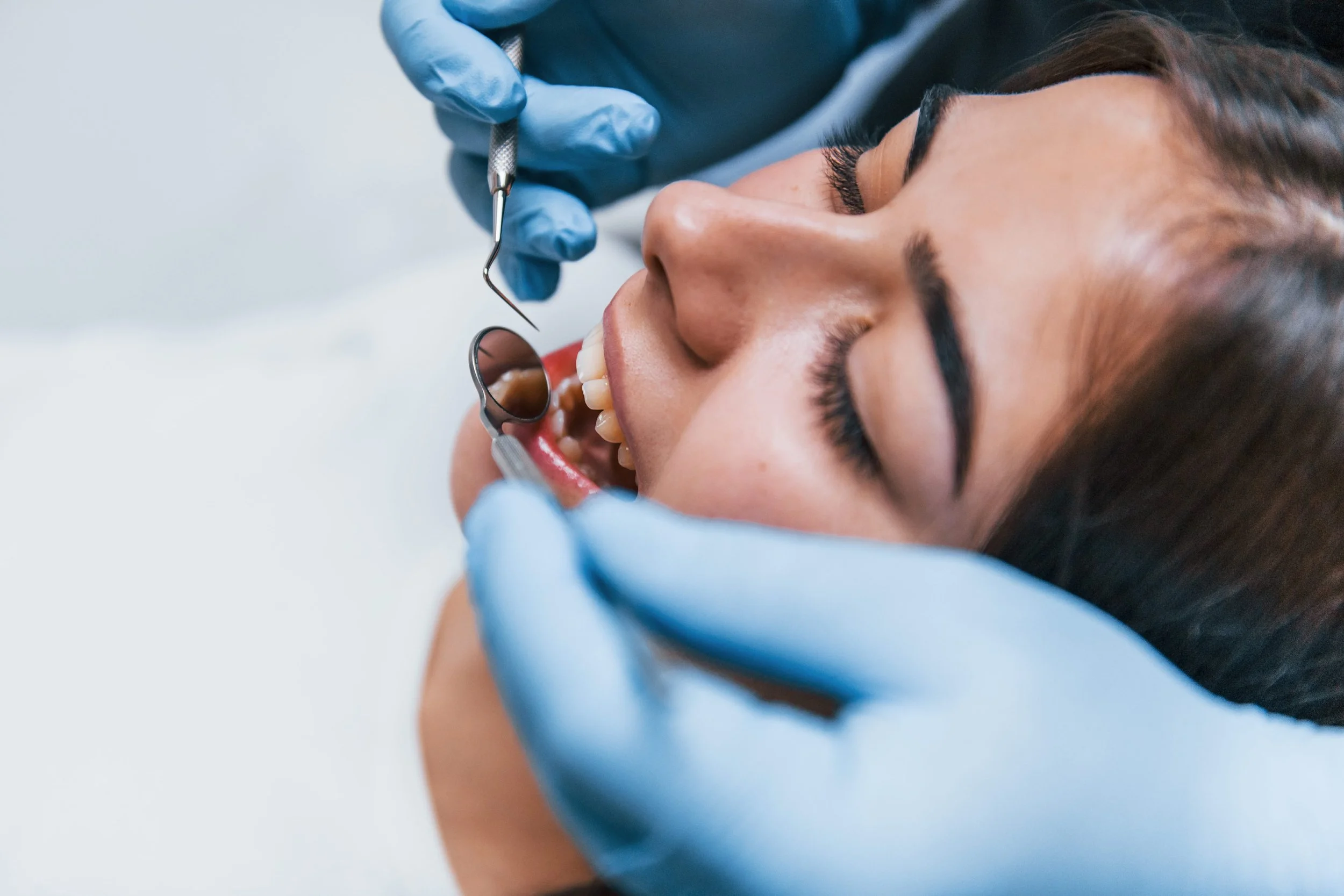
Crowns are recommended when a tooth is significantly at risk for fracture or has lost a large amount of structure to decay. All molars that have been root canaled should be crowned to prevent non-restorable fracture.
What to Expect During Crown Treatment in Park Slope
Crown treatment is planned carefully around the condition of your tooth. Dr. Angelique Freking and her team take the time to explain each step so there are no surprises. When CEREC is appropriate, treatment is usually completed in one visit.
Step 1: Evaluation and preparation
Our clinical team examines the tooth and confirms that a crown is the right solution. We then review the costs associated with treatment. Once you’re ready to proceed, we numb the area so you are comfortable and remove any weakened or damaged tooth structure. We may add filling material, called a core build up, and then prepare the tooth to allow for the appropriate thickness of crown material.
Step 2: Digital scanning
After preparation, we take a digital scan instead of a traditional impression. This scan captures detailed information about the tooth and your bite, which helps guide the design and fit of the crown.
Step 3: Design and placement
Once we’ve captured the scan of your prepped tooth, we use CAD/CAM software to design the crown with careful attention to shape and function.The design is sent wirelessly to our in-house CEREC mill for fabrication. Once your new crown is milled, we try it in, and then process for final delivery.
If we send your crown to the lab, we join your scan as well. They will do the design and fabrication for us while you wear a temporary crown (we often mill these too).
Step 4: Bite check and final adjustments
Before you leave, we check your bite and make final adjustments so the crown feels natural and comfortable when you chew.
When same-day technology is used, many patients leave our Park Slope office with their final crown already in place. If sensitivity occurs, it is usually mild and temporary, and most people return to normal activities right away.
If you have a tooth that’s been bothering you, schedule your appointment. An exam can help determine whether a crown is the right next step.
How Long Dental Crowns Last
The lifespan of a dental crown varies from person to person. How long a crown lasts depends on factors like bite forces, teeth grinding, and daily oral hygiene.

The lifespan of a dental crown varies from person to person. How long a crown lasts depends on factors like bite forces, teeth grinding, and daily oral hygiene.
Regular dental checkups help us monitor the crown and the surrounding tooth over time. Catching small changes early can extend the life of the restoration.
Rather than having a fixed lifespan, crowns last longest when they’re well cared for and checked regularly as part of ongoing dental care.
When a Bridge Makes More Sense
A dental bridge might be an option if you're missing a tooth and an implant isn't the right fit, either because of bone availability, medical history, or personal preference.
Here's how it works: a bridge uses the teeth on either side of the gap as anchors. Those anchor teeth are prepared and crowned, and a false tooth (called a pontic) is suspended between them to fill the space. The result is a restoration that doesn't come in and out.
Bridges aren't the right solution for every gap. They work best when the neighboring teeth are already compromised enough to benefit from crowns themselves, or when implants simply aren't an option. If the adjacent teeth are otherwise healthy, placing crowns on them solely to support a bridge is something we'd think carefully about.
At Park Slope Dentistry Seventh Avenue, we don't steer you toward one option over another. We look at what's actually going on with your teeth, your bone, and your overall oral health. We explain the tradeoffs honestly so you can decide what makes sense for your situation.
If you've lost a tooth and aren't sure where to start, book an appointment online or call us at 718-866-4645, and we'll take a look.
Why Choose Park Slope Dentistry Seventh Avenue for Crowns
Thoughtful Crown Care, Backed by Modern Technology
Dr. Angelique Freking’s approach to crown treatment is grounded in a simple idea: restorative care should be precise, conservative, and centered on the patient. Every crown or onlay is planned to protect the tooth long term.
At Park Slope Dentistry Seventh Avenue, crowns are never prescribed without thoughtfulness. Dr. Freking and our team take time to evaluate:
how the tooth functions within your bite
how much healthy structure remains
which approach will provide the most stable result
Modern technology plays an important role in that process. Digital scanning allows us to accurately collect detailed models of teeth without traditional impressions, while in-office CEREC technology lets us design and fabricate many crowns and onlays the same day, when appropriate. These tools help improve fit, reduce unnecessary visits, and, in many cases, eliminate temporary restorations.
Technology, however, is never used by default. Some teeth are better served with a crown fabricated by a dental laboratory. When that’s the case, we’ll explain why and recommend the option that best protects your tooth over time.
Dental care should fit into real life. With online booking, flexible scheduling, and a local team that knows you and your history, treatment stays efficient, clear, and personalized from start to finish.
And while crowns and onlays are a key part of what we do, they’re just one piece of comprehensive care designed to keep your smile comfortable, strong, and functioning well at every stage.
Let’s Talk About Whether a Crown Is the Right Fix
If you’re dealing with a tooth that’s been bothering you, a conversation can help clarify what’s going on and whether a crown makes sense. There’s no pressure to decide right away. We’ll review what we see, explain your options, and answer your questions so you can move forward comfortably.
You can book an appointment online or call 718-550-6916 to schedule a visit.
Dental Crown FAQs
-
The procedure is done with local anesthesia, so you should be comfortable during treatment. Some mild sensitivity afterward is normal and usually resolves within a short time.
-
It depends on the condition of the tooth. Fillings work well for smaller areas of damage, while crowns are used when a tooth needs added strength and protection.
-
In many cases, yes. When CEREC is appropriate, crowns or onlays can often be designed and placed in a single visit. Some situations are better served utilizing a dental lab.
-
Crowns are cared for like natural teeth. Regular brushing, flossing, and routine dental checkups help keep the crown and the surrounding tooth healthy.